

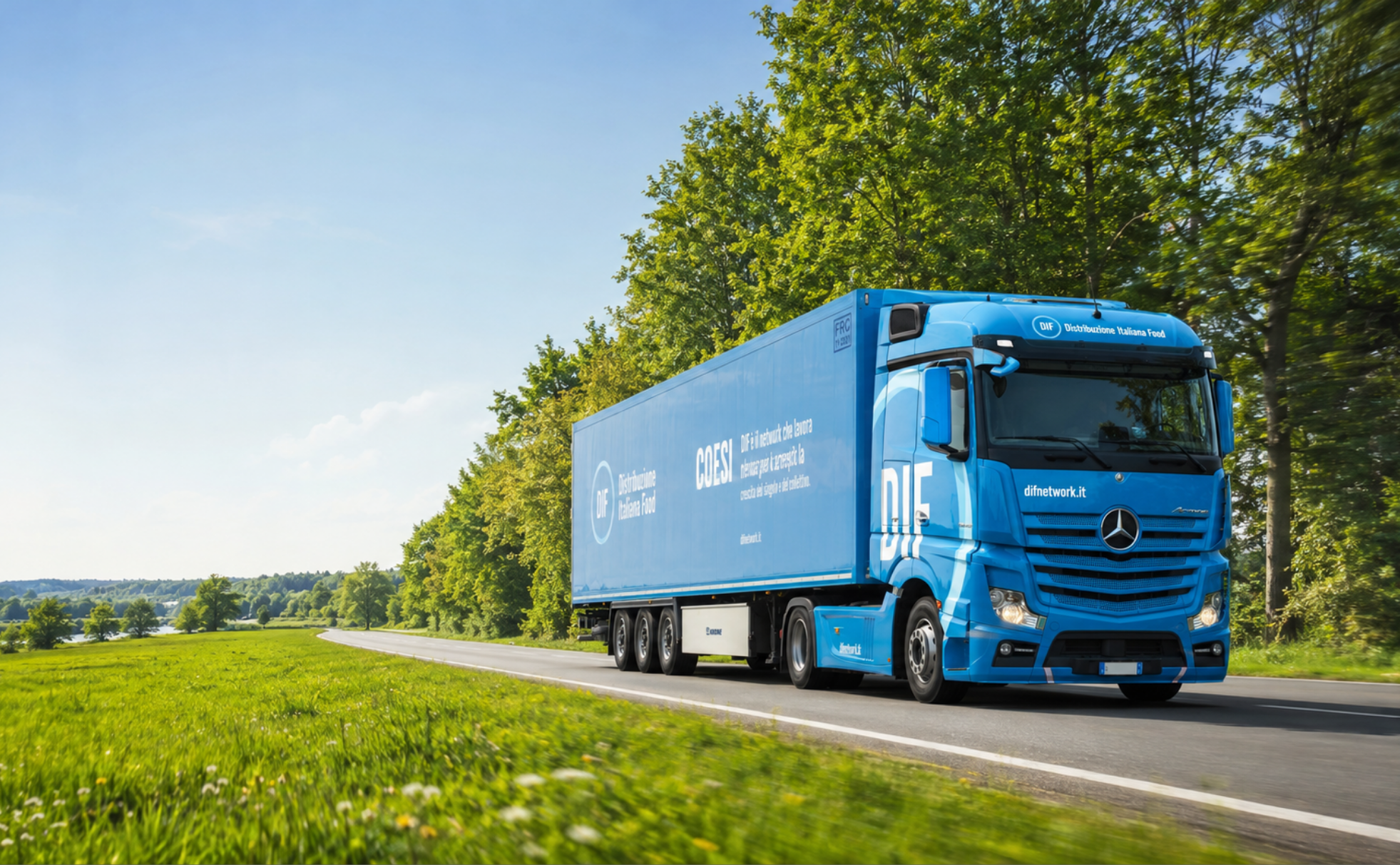
Food logistics: the DIF network grows through new hubs and increasingly connected flows
Food logistics today requires a network capable of managing territory, infrastructure and information at the same time. For DIF – Distribuzione Italiana Food, growth is driven by these elements: greater proximity to flows, stronger coordination between network nodes and tools that make the entire distribution process more visible and easier to manage.
In food distribution, proximity remains a decisive operational factor. Being close to territories, delivery points and the last mile means being able to manage flows with greater continuity and responsiveness. But in an increasingly complex supply chain, physical presence is only part of the equation: the movement of goods must be matched by an equally structured and transparent flow of information.
This remains a key issue for the logistics sector in 2026. In an analysis published in July, the Gino Marchet Contract Logistics Observatory of Politecnico di Milano highlighted the evolution of supply chain relationships and the growing focus on flexibility, compliance, transparency and a collaborative approach between shippers and logistics providers. For networks distributed across multiple territories, this evolution translates into a concrete need: operational capacity and coordination quality must grow together.
Two developments currently underway at DIF – Distribuzione Italiana Food fit precisely within this dual perspective: the strengthening of the physical network and the evolution of the information systems supporting Network processes.
Closer to the flows: territorial presence as an operational lever
DIF Network operates according to a collaborative logistics model that connects companies specialising in food, hubs and transit points through shared processes and standards. The network currently includes 4 hubs, 63 territorial locations and 54 companies, with a structure designed to combine nationwide capacity with direct knowledge of local markets.
Within this model, a hub does not simply represent additional capacity. Its value depends on the role it plays within logistics flows and on its ability to make the connection between the national network, local territories and the last mile more effective. This is the same logic that has driven the strengthening of DIF’s presence in North-East Italy through the Verona Regional Hub, which forms part of a broader multi-hub organisation.
The same approach will guide the next stage of network development. DIF is working on the activation of new hubs in Southern Italy over the coming months, with locations intended to strengthen the connection between the national network and island-related flows.
The strategic point is therefore already clear: the objective is not simply to add more points to the map, but to increase the Network’s ability to serve areas and flows that require proximity, coordination and operational continuity.
From the physical network to the information network
More nodes, more territories, more flows to manage: as the network grows, the quality of coordination becomes even more important. In this direction, DIF is strengthening its network information system through new functional releases designed to support the Network’s operational evolution and provide a more structured approach to information flow management.
This development reflects the specific requirements of food distribution and the need to ensure greater continuity in the information shared between the central organisation, hubs and network companies. The first releases are expected from the beginning of 2027.
A system that evolves together with the network
In a collaborative logistics model, technology creates value when it improves the ability to read, share and manage what happens throughout the distribution process.
For DIF, the evolution of the information system is moving in this direction: strengthening the digital foundation on which activities, information and operational relationships converge, while maintaining consistency across the different parties involved and supporting more integrated network management.
This path combines infrastructure growth with tools that are increasingly aligned with the complexity of logistics flows and the requirements of a food supply chain distributed across the territory.
Two developments, one direction
New hubs and the evolution of the information system therefore represent two parallel developments within the same model. On one side, greater territorial coverage for physical flows. On the other, stronger coordination of information flows.
Both respond to the same requirement: making a distributed network more connected, transparent and manageable, keeping operations close to the territory and information close to decision-making.
The next steps in the Network’s development will focus precisely on this integration between territory, processes and information.
Also featured on Logistica Efficiente
This topic was also published on Logistica Efficiente, a specialised publication covering logistics and supply chain topics. Read the article on Logistica Efficiente.

A network built to protect the value of food
DIF supports food producers, distributors and transport companies through an organised, widespread network specialised in food distribution.
Food producers and distributors
Transport companies

